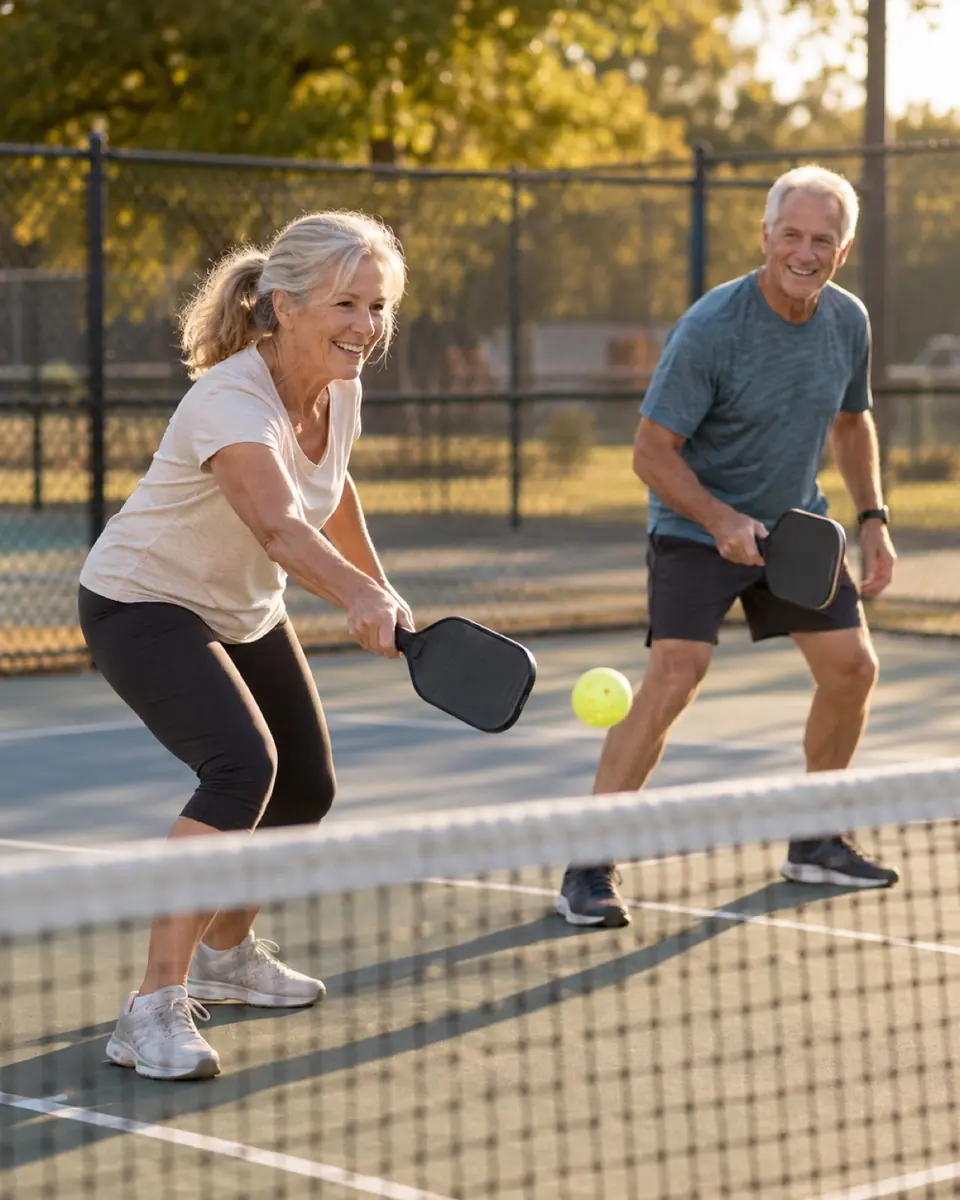
Pickleball has become the social sport of choice for a lot of people over 60, and it is easy to see why. The court is small, the paddle is light, the games are short, and there is always someone to talk to between points. It is also quick. Short sprints, sudden stops, reaching low for a dink and turning to chase a lob all happen within a few seconds. A little planning before and after you play makes those mornings at the courts a lot more enjoyable.
This guide covers a ten-minute warm-up you can do beside the court, smart habits during play, a short cool-down, and a checklist for your courtside bag.
A ten-minute warm-up beside the court
Many players walk from the parking lot straight into a game. Muscles and joints usually move more comfortably once you are warm, so give yourself ten minutes. You can do every step below with a paddle in your hand and a fence or bench nearby for balance.
- Brisk walk, two minutes. Walk a few laps around the courts, swinging your arms. You should be able to talk, but you are breathing a little faster.
- Side steps, one minute. Shuffle sideways along the baseline and back, staying low and light. This is the movement you will use most in a game.
- Arm and shoulder circles, one minute. Small circles that grow larger, forward then backward.
- Trunk turns, one minute. Hold the paddle in front of you with both hands and turn gently from side to side.
- Leg swings, one minute. Hold the fence and swing one leg forward and back, then side to side. Switch legs.
- Wrist and forearm loosening, one minute. Make slow circles with your wrists, then open and close your hands a few times.
- Easy dinking, three minutes. Rally softly at the kitchen line with a partner before you start keeping score.
Habits during play
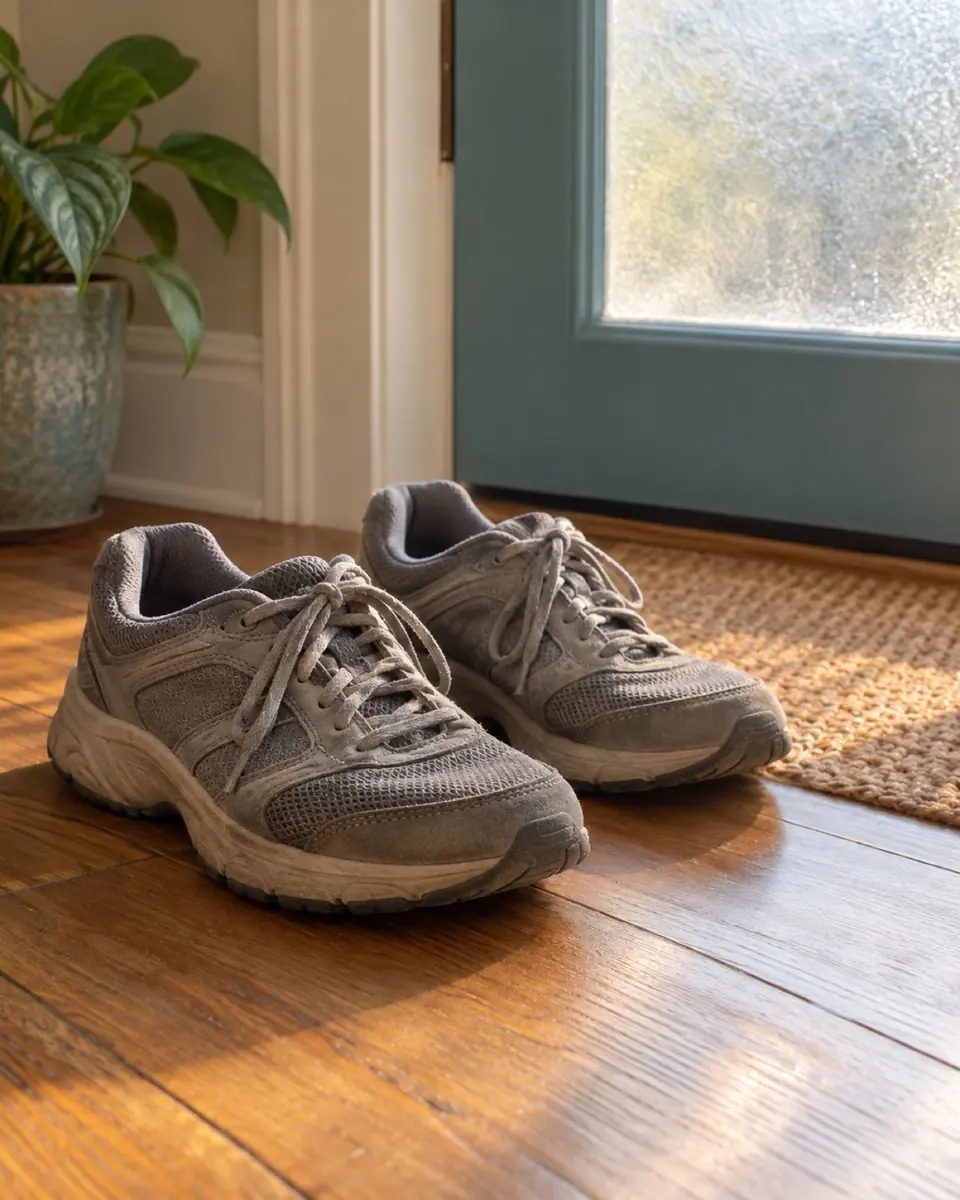
- Wear court shoes. Shoes made for tennis or pickleball support the side-to-side movement the game asks for.
- Call "yours" early. Many collisions and stumbles happen when two partners chase the same ball. Talk on every shot.
- Be careful backing up. Turn and walk back for a lob instead of backpedaling. If you cannot reach it safely, let it go. It is one point.
- Rest between games. Sit out a game when you need to. Most groups rotate, so the break is built in.
- Drink water before you feel thirsty, especially on warm days and on outdoor courts.
- Play at your level. Many clubs sort open play by skill rating, which keeps games friendly and fair.
If a movement causes sharp or unusual discomfort, stop playing for the day, and if it continues, talk with your doctor.
The cool-down: five to ten minutes
When the last game ends, many people pack up and drive home. A short cool-down helps you shift gears, and it is a nice time to finish a conversation with your partners.
- Walk slowly around the courts for two or three minutes.
- Calf stretch: hands on the fence, one foot back, heel down. Hold about 20 to 30 seconds on each side.
- Front-of-thigh stretch: hold the fence and gently bring one heel toward you. Switch sides.
- Chest and shoulder stretch: clasp your hands behind your back, or press a forearm on a post and turn away gently.
- Forearm stretch: arm straight in front, palm up, and use the other hand to ease your fingers back.
- A short self-massage on your forearms, shoulders or calves. Many players keep a balm stick in their bag for this step.
Courtside bag checklist
- Water bottle, plus a second one in the car on hot days
- Hat, sunglasses and sunscreen for outdoor courts
- A light layer for cool mornings, and a small towel
- An extra ball or two, and your paddle in a cover
- A snack, such as fruit or a granola bar
- Any medications your doctor wants you to keep with you
- Your phone, an emergency contact card and your car keys in a zipped pocket
- A balm stick for your cool-down, if you use one
Fitting pickleball into your week
The CDC's activity guidance for adults 65 and older suggests about 150 minutes of moderate activity each week, plus strength and balance work. An hour or two of social pickleball covers a good share of that. On non-court days, a walk and a few at-home strength moves, like sit-to-stands and heel raises, round things out. Our article on staying active with walking, golf and gardening has a simple sample week you can borrow.
In cold months, many groups move indoors to gyms and community centers. K61's guide to staying active when it gets cold has more ideas for keeping your routine going until spring.
Topical or gummy for court days?
Players who use CBD tend to fall into two groups. Some like a topical as part of their cool-down. Others prefer a daily gummy as part of their morning or evening routine. Neither is a performance product, and neither replaces a warm-up. K61 explains the differences in Balm or Gummy? How to Choose Between Topical and Oral CBD. Whichever you choose, check the batch lab report first. Our step-by-step guide on how to read a CBD lab report shows you how.


Want a printable plan for the fridge? Our free Active Aging Starter Guide has a weekly movement plan, a daily routine checklist and questions for your doctor.
Common questions
How long should I warm up before pickleball?
About ten minutes is a good target: a brisk walk, side steps, arm circles, trunk turns and a few minutes of easy dinking before you keep score.
What shoes are best for pickleball?
Court shoes made for tennis or pickleball. They support side-to-side movement better than running or walking shoes.
Can I use a CBD balm after playing?
Many players include a topical balm in their cool-down. Test any new topical on a small patch of skin first, and talk with your doctor before trying CBD, especially if you take medications.
Talk to your doctor first, especially if you take medications
CBD can affect how some other medicines work. Before you try any CBD product, bring the label (and its lab report) to your doctor or pharmacist and ask whether it makes sense with everything else you take.
This article is for general education and is not medical advice. These statements have not been evaluated by the FDA. K61 products are not intended to diagnose, treat, cure, or prevent any disease. For adults 21+.